Resolution 1-25: Drought and Livestock Agri-Stability
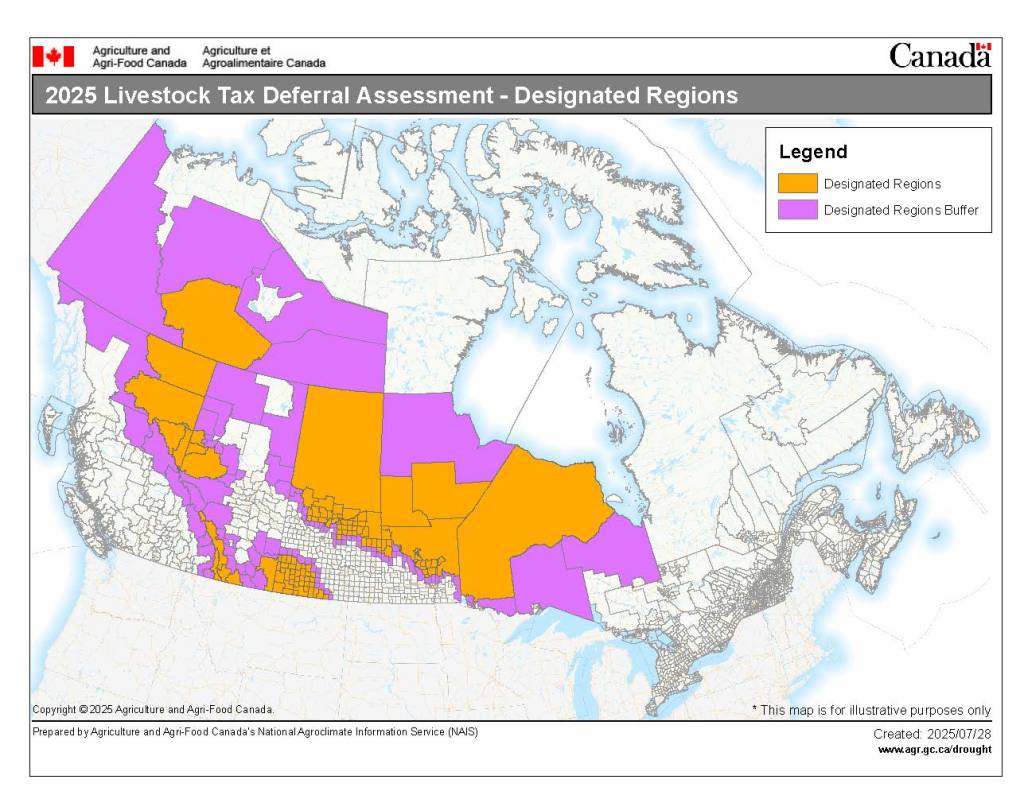
In 2025 the ASBs passed resolution 1-25 calling for reforms to how the Livestock Deferral Program and any Agri-Recovery programs are applied. In 2023 the Agri-Recovery followed municipal boundaries and only those municipalities that declared an Agriculture Disaster were initially included in the response. This is in consistent with the RMA Guide for Declaring Municipal Agriculture Disasters which states that the Agriculture Disaster Declarations are only a communication tool and the Agri-Recovery response is based on weather data from the Federal Drought Monitoring System.
Based on the feedback from the ASBs the province was able to expand the initial areas included in the response. The response from AAFC to the ASB Resolution 1-25 is that the higher moisture conditions and limited data points in the green zone (forested areas) were impacting the eligibility of livestock operations that boarder the green zones.
“Your observation that the overall drought assessment is skewed by the presence of moisture within surrounding forested areas is correct. Currently, there is limited data in northern regions of Canada and limited input at the provincial, territorial and citizen level. Assessments rely on availability of data, which can always be strengthened.
AAFC continues to examine ways to improve its tools with the goal of making the
CDM assessments better representative of drought conditions. These developments include:
- – incorporating new gridded weather analyses that will provide additional and
detailed information in data-sparse regions;- – working with provincial ministries and agricultural producers to increase input
to the CDM in order to better characterize the regional impacts of drought
conditions;- – working to improve its drought assessments through the Agroclimate Impact
Reporter (AIR), an online tool that collects and reports weather and climate
impacts on farm operations across Canada; and- – minimizing the under-designation of Livestock Tax Deferral areas by ensuring
regions adjacent to municipalities severely impacted by drought are also
eligible for this program.
I trust that the additional information on the CDM will be of assistance. For more
information on the AIR application and/or to contribute to the network, please visit the Agroclimate Impact Reporter website.”
Many of the Peace region ASBs are concerned about the availability of reliable data due to the limited number of weather stations and proximity to green zone data collection sites. There is also the ongoing concern that droughts seldom follow municipal boundaries. If the process will be determined by data, then data needs to be available and used for livestock operations on both sides of a municipal boarder. In response to this concern, changes were made to the 2024 program. See the responses to resolution 1-25 and the 2025 Livestock Tax Deferral announcements for more details.
Links:
“Agriculture Service Boards, working for Alberta farmers.”
Discover more from Agricultural Service Boards
Subscribe to get the latest posts sent to your email.

You must be logged in to post a comment.