
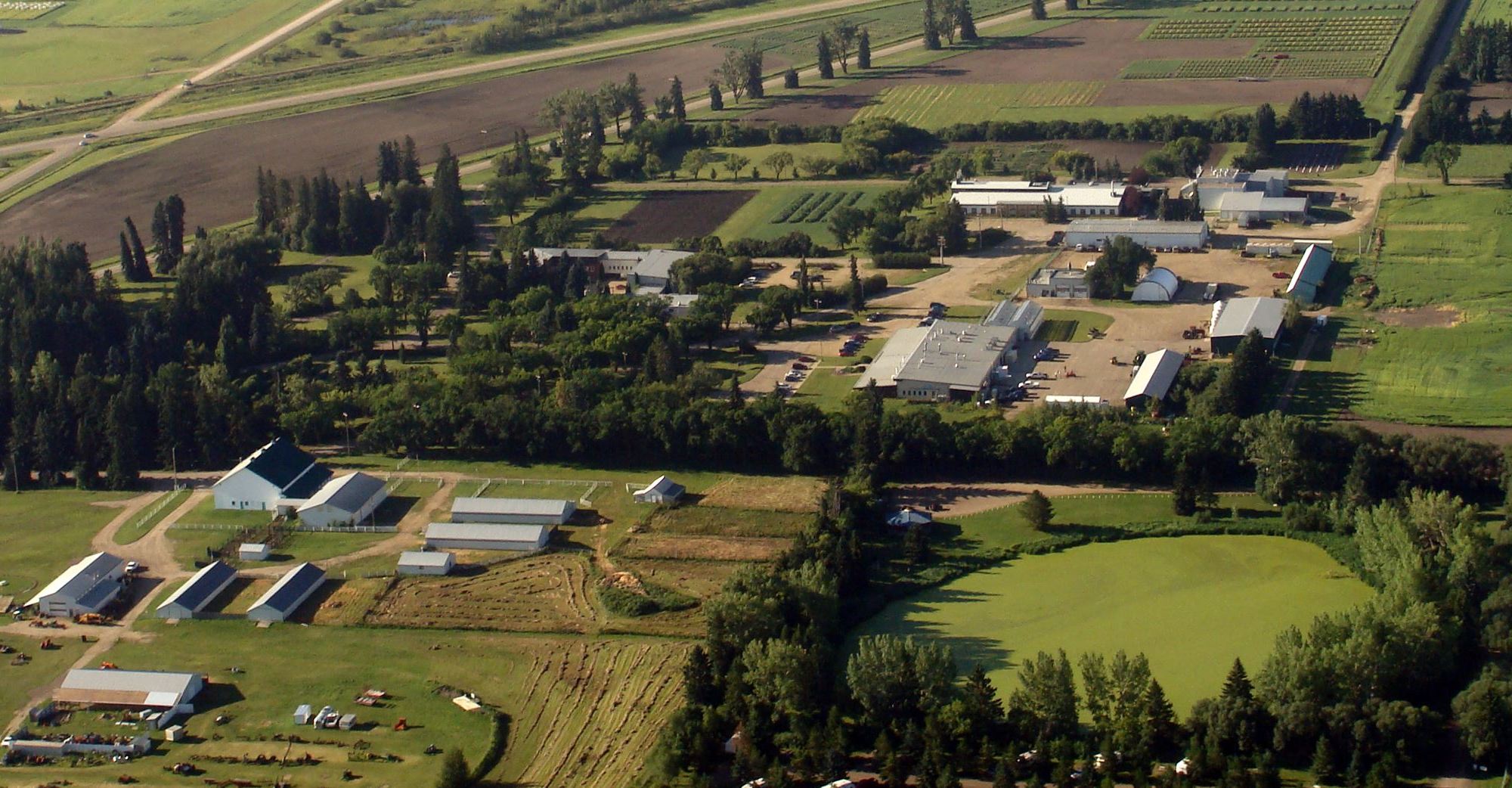
Urging the federal government to reconsider the closure of the Lacombe Research and Development Centre.
For more than 119 years, Lacombe has been a cornerstone of Canadian agricultural innovation . It is not simply a research station — it is a national asset. From forage breeding and feed efficiency research to meat science, carcass grading, and food safety, the work conducted at Lacombe has directly strengthened Canada’s beef sector, supported export market access, and enhanced public confidence in our food system.
A Network Unlike Any Other
What makes Lacombe so significant is not only its history — it is the collaborative ecosystem it anchors.
Researchers at Lacombe have worked closely with the Lethbridge Research and Development Centre, Western Crop Innovations, Results Driven Agriculture Research (RDAR), universities, and industry partners. Together, they have built one of the most advanced beef-forage innovation systems in North America.
Plant breeders and livestock scientists in Lacombe have pioneered feed efficiency selection methods that integrate forage breeding with livestock performance data. This approach — unique in the world — focuses on improving feed conversion and reducing environmental impacts while strengthening economic returns for producers. The forage varieties developed through this method are now in the final years of development.
To withdraw federal capacity now — after decades of producer, provincial, and federal investment — would be shortsighted, wasteful, and deeply disruptive.
Producers Have Invested — In Good Faith
Canada’s beef producers have increased their research contributions by over 600% in the past decade. Alberta Beef Producers alone currently has close to $1 million invested in AAFC projects that may be affected.
These investments were made strategically, in partnership with federal infrastructure and expertise. Producers view research not as a discretionary expense, but as an investment in long-term competitiveness, food safety, environmental stewardship, and consumer trust.
When federal research capacity is reduced, it places producer dollars and multi-year projects at risk — and it undermines the collaborative model that has made Canadian beef globally respected.
Public Good Research That Cannot Be Rebuilt Overnight
Industry leaders have clearly warned that the loss of forage breeding, carcass grading, and food safety expertise will have long-term consequences. Research capacity, once dismantled, is not quickly restored.
The federally inspected abattoir and meat science program at Lacombe supported grading modernization, export equivalency work, and food safety validation. These are foundational functions in a trading nation. Canada’s ability to maintain grade harmonization, respond to food safety concerns, and address non-tariff trade barriers depends on domestic scientific capacity.
At a time when Canadians expect safe, affordable, and sustainably produced food — and when global markets are increasingly competitive — reducing research infrastructure sends the wrong signal.
What This Means on the Ground
Agricultural Service Boards serve as the operational link between legislation and field-level delivery. We see firsthand how federal research translates into practical impact: improved winter grazing practices, more resilient forage varieties, better feed efficiency, and science-based food safety protocols that prevent crises before they reach consumers.
The Lacombe closure is not an abstract administrative change. It affects producers who have co-invested. It affects long-term data sets that cannot be replicated. It affects rural communities that have built their economic and research identity around agricultural innovation.
A Call for Reconsideration
ASBs are urging the Government of Canada to pause and reconsider the closure of the Lacombe Research and Development Centre, preserve critical research capacity, protect producer-funded projects, and engage directly with provincial, and industry partners to find sustainable solutions.
Research is not an expense. It is an investment in Canada’s food security, climate resilience, and economic independence.
Canada’s producers have stepped up. Local governments have stepped up. Industry has stepped up.
Now is the time to protect the research partnerships that ensure the long-term stability and global competitiveness of Canada’s beef and forage sector.
Background:
- Letter to Prime Minister Carney and Minister MacDonald Feb 2026
- RESOLUTION PC1-24 Financial Sustainability for Field Crop Development Centre (FCDC) Now the Western Crop Innovation Centre.
- City of Lacombe: Lacombe Research and Development Centre Closure landing page
- Task Force News Release
Discover more from Agricultural Service Boards
Subscribe to get the latest posts sent to your email.
