
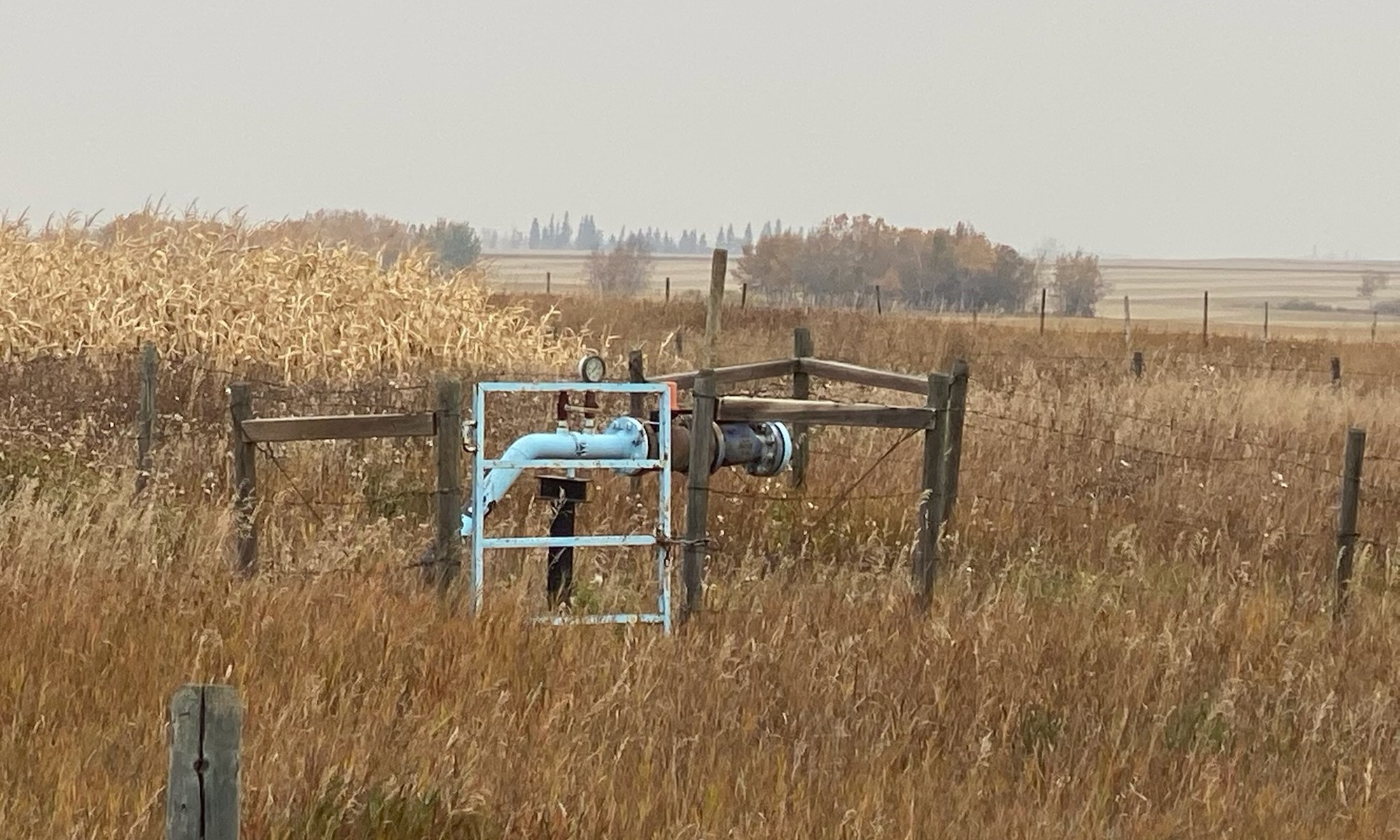
At our May 21, 2026 ASB Provincial Committee meeting, we heard a detailed update from Alberta Agriculture’s Crop Assurance Specialist, Joshua Melzer, on the new approach to dealing with weeds and pests on oil and gas sites regulated by the Alberta Energy Regulator (AER). This work is rooted in new legislation and a formal referral and enforcement process that is now available to municipalities. The province then followed up with the full Weeds on Wellsites Working Group on July 9, 2026.
New legislation and RCAM orders
A key change is the addition of weeds and pests to the Oil and Gas Conservation Regulation, signed March 31, 2026 and in effect as of May 1, 2026. Under this regulation, “reasonable care and measures” (RCAM) orders can now be applied to weed and pest issues under the Agricultural Pests Act and the Weed Control Act on oil and gas AER‑regulated sites.
In practical terms, this means the AER is now authorized to issue RCAM orders to licensees for weed and pest problems on oil and gas sites. These RCAM orders act as a regulatory backstop: they compel the company to comply with weed and pest control requirements after municipal tools have been exhausted.
This mechanism currently applies to AER‑regulated well and facility sites. Joshua noted that pipeline rights‑of‑way and First Nations reserve lands are excluded from this process at this time. Pipeline right-of-ways are extensive linear corridors that can involve multiple operators and overlapping interests within a single right‑of‑way, making them more complex to manage than discrete well or facility sites, hence the exclusion for now.
How the referral process works
RCAM orders are not a first step. They are triggered only after the municipal process has run its course. The expected sequence is:
- A weed or pest issue is identified on an AER‑regulated site (either by a landowner complaint or by an ag fieldman/municipal inspector).
- The municipal inspector confirms the presence of noxious or prohibited noxious weeds and delivers and issues a weed notice under the Weed Control Act.
- Any appeal of the weed notice is heard and concluded.
- The weed notice expires and the licensee still has not complied. The municipality may choose to carry out enforcement (e.g., spraying), but this is not required for a referral.
- At that point, the municipality can submit a formal referral to the AER using a weeds/pests evidence submission form. Weed and Pest Referral – Evidence Submission Form | Alberta Energy Regulator
That submission includes details such as the municipality, inspector contact information, licensee name, legal land description (LSD), license type, whether the site is under the Orphan Well Association (OWA), and a summary of enforcement steps already taken.
Once the AER receives the referral, the file is reviewed and an RCAM order is issued to the licensee. The ag fieldman who submitted the referral may be called on as a subject matter expert to provide additional information if needed. If the licensee does not comply with the order, the AER can escalate using its compliance tools, such as administrative penalties or restrictions on the company’s licensed activities.
What this is – and what it is not
This is not a cost‑recovery tool for municipalities. If a county or municipality does weed control work on an AER‑regulated site, the RCAM mechanism does not reimburse those costs. The RCAM approach is most effective with solvent, operating licensees (for example, large companies that are still active and have the ability to respond).
A separate process is developed with the Orphan Well Association (OWA) for orphaned sites under their care. The OWA can spray the orphaned site directly or reimburse municipalities for conducting weed control on an orphaned site themselves. For more information on the OWA process please reach out to Joshua at Joshua.melzer@gov.ab.ca or call at 587-589-5317.
Tools and data sources for municipalities
There are a number of online tools that municipal staff can use when preparing referrals and identifying the status of the oil and gas licensees:
- AER OneStop public map viewer, to identify AER‑regulated sites and confirm locations and responsible licensees. AER OneStop
- AER ST 104 (licensee contact report), which provides company names, mailing addresses, and phone numbers. ST104 | Alberta Energy Regulator
- Orphan Well Association map viewer and inventory spreadsheet, to confirm whether a problematic site is an orphan site under OWA management and to obtain license numbers. Site-specific Inventory | Orphan Well Association
- More information can be found on Weed and Agricultural Pest Compliance | Alberta Energy Regulator
Call to Action: Developing a provincial list of problem sites
Finally, Joshua emphasized that Alberta Agriculture and the AER want to build a provincial picture of chronic problem sites.” Over the coming season, they are encouraging ag fieldmen and municipalities to track and share information on weed and pest affected well sites, with Alberta Agriculture. That information can help identify patterns, problem areas and licensees as well as prioritize enforcement
The addition of weeds and pests to the Oil and Gas Conservation Regulation presents a new opportunity to address longstanding concerns. While RCAM orders are not an immediate solution and often result in corrective actions occurring in the following growing season, they provide an enforcement pathway that previously did not exist. The effectiveness of this approach will rely heavily on a collaborative approach between the ag fieldmen, Alberta Agriculture, and the AER.
Discover more from Agricultural Service Boards
Subscribe to get the latest posts sent to your email.

You must be logged in to post a comment.